

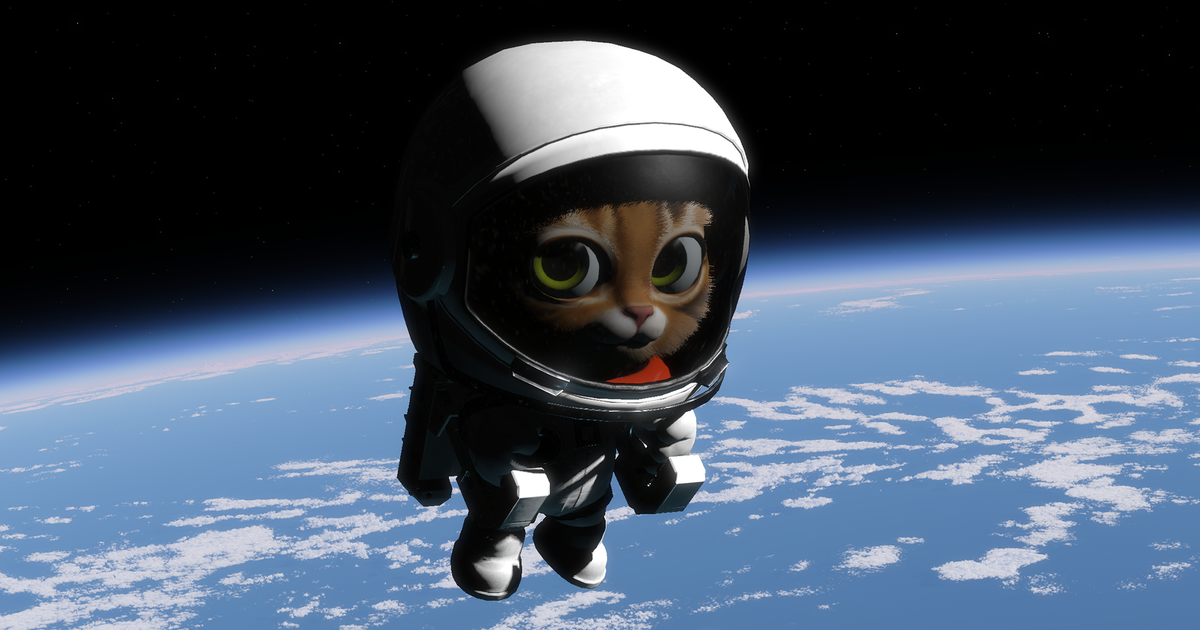
Rocketwerkz CEO Dean Hall and Floating Point Origin Interactive founder Felipe Falanghe sound downright giddy when they talk about the new C# framework named “Brutal.” During a recent call with Game Developer, the brains behind DayZ and Kerbal Space Program couldn’t stop making random asides to each other about what they’ve pulled off with the tool and how they’ve inspired each other’s work.
Their joy was infectious because once you understand how Brutal functions, you realize every new feature is a bona fide accomplishment even for this pair of seasoned developers. “It’s called Brutal for a reason,” Hall said after Felipe compared working with it to the experience of sitting on a bar stool while all your friends using engines like Godot are sitting on a comfy couch.
For someone like me, who was a bit lost on the meaning of framework, framework here is what you use to build an engine (I thought it’s on top of the engine instead)
Also, the beginning of the article is a bit messy and the author jumps around thoughts, but it gets an interesting read, and they even talk about how to actually use AI for benefit instead of for multiplying bugs:
“It’s hard for me to talk about it without sounding like a cult member,” Hall said sheepishly, when describing how he uses ChatGPT while working in Brutal. But he and Falanghe agreed—using LLMs has made language-based coding an easier task.
Not that much easier, to be clear. They both said that when querying an LLM, they rarely copy and paste whatever code it generates. Instead they ask questions about C# libraries or Vulkan documentation, and the software is able to return high-quality answers. Answers that normally require programmers to sit down for hours to pore over documentation or scour ancient forums to find that one post with the solution (which was probably written in 2014).
“An LLM is essentially tokenizing language, then putting masses of vectors around that to build linkages between those tokens,” said Hall. “What could be better than a highly-structured, in fact brutally structured language?” Vulkan and the latest version of C# are very “highly structured, with very clear syntax.”
Developers critical of ChatGPT maker OpenAI should be able to replicate this process on open source models like DeepSeek, Falanghe said (though he hasn’t tried this himself).
This process doesn’t work as well with Unity and Unreal because they’re both “highly spatial” as a result of their visual scripting tools. A solution for one game’s problem may not work with another because of the different scripted elements. LLMs scouring the web can’t produce consistent answers.
It is also the opposite of vibe coding, a method where programmers tell an LLM what they want a system to do and it generates code—and it isn’t code completion, where AI tools “predict” what someone is typing and finish the string for them to speed up their workflow. The only thing the LLM does for Brutal developers is speed up access to information, letting them research without watching a 40 minute YouTube video.
Maybe we will finally see no-vibe solutions, like we saw no-code solutions 🌚
When it comes to game development, engines usually have their own IDE and have many tools ready that make it so you don’t have to code everything - in Godot, for instance, you can create AnimationPlayer and AnimationTree to handle animations.
Frameworks (MonoGame for C#, libGDX for Java, LOVE2D for Lua) can be understood as “pre-engines” or libraries for those coming off webdev, they offer lots of ready made functions to make your life easier (input handling, loading and handling most types of data, showing stuff on screen), but you’ll still need to code pretty much everything else.
Visual scripting tools like Unity and Unreal Engine were supposed to speed up development and let designers think more about their game and less about blocks of code. Why would we go back to a world where everyone’s building their own game engines?
A number of reasons I can think of.
One: debloat and performance. Unreal and Unity are extremely bloated. As much as I enjoy Godot, the bare minimum executable that it produces is over 20MB. Less bloat means less code being shipped which typically translates into better performance.
Two: better control of what’s going on. Sure, UE’s source is open for you to peek in and see what’s going on, but it has literal decades of baggage. Unity has its way of doing things and, other than plugins, you’re stuck with it. The point that Dean Hall makes of these engines all working based on scenes[1] and not every game needing that is spot on.
Three: Visual scripting isn’t new and it leaves you stuck with the tool. There are several engines that offer visual scripting, some decades old (Clickteam Fusion, GameMaker, RPG Maker, Construct), being widely used for simpler games, but never for stuff that “thinks outside the box”, so to speak.Hall made a rather bold prediction: frameworks like Brutal, not game engines, will be the future of the game development.
I wouldn’t go that far. A lot of big budget games will still use ready-made engines like UE and Unity simply due to cost and time, others will do things on their own “hard” way. CDProjekt ditched their own custom engine that powered Witcher 3 and Cyberpunk 2077 to work with UE going forward.
The only thing the LLM does for Brutal developers is speed up access to information, letting them research without watching a 40 minute YouTube video. (…) You can boil down Hall’s theory about what he calls “the death of big engines” to this: if LLMs make language-based coding more accessible, than visual-based scripting loses its edge.
Not going to be the “death” of big engines because he’s putting waaaay too much faith in people bothering to even search “how to do X using Y framework”.
Hall’s vision of the future game industry is almost the polar opposite of the one pitched by UGC platforms and AI boosters. Instead of a world where game development becomes easier through simplified tools, it becomes more accessible through easier understanding of language-based programming through LLMs.
In other words, it’s a StackOverflow that won’t berate you for “a stupid, repeated question” which should, in theory, help out with new stuff so long as it is properly documented, which seems to be the case with the Vulkan API
“If you take Unity or Unreal, you have this editor scene and push play, it becomes a game scene and everything in it is relative to 0-0-0 of that scene,” said Hall. “That’s how you draw things, and it’s so ingrained that people have a hard time imagining something that’s different.” (…) The thinking wasn’t “Unity can’t do this, I need a tool that can do this.” It was “our game needs floating origin to work this way, how do we do it?” ↩︎
