

0·
3 months agoI’ve only had to go through a captive portal once with it but MAC cloning was sufficient

I’m beautiful and tough like a diamond…or beef jerky in a ball gown.
– Titus Andromedon
I’ve only had to go through a captive portal once with it but MAC cloning was sufficient
Security is pretty minimal, not gonna lie.
There’s a 50 GB LUKS partition that stays locked unless I’m actively using it. It’s got backup copies of my important/critical documents and password manager exports but the rest of it is just media and doesn’t really merit encryption.
All applications have local accounts but I’m not using LDAP or any kind of SSO like I am with my main stack.
At home, I keep the firewall disabled on the interface configured as “WAN” so I can access its services directly via their hostname (I point its wildcard DNS record to its local “WAN” IP) but do enable firewall when I’m using it on an untrusted network. Granted, I have to manually remember to do that, so that’s kind of a security risk if I forget. Generally, though, when I’m using it remotely, it’s using my secondary phone as a USB-tethered uplink so even if I leave its internal services exposed to WAN, the NAT from the phone blocks that. One of my goals, eventually, is to automate some of the firewall rules depending on where I’m using it.
Ah, yeah, you can have most devices with lithium batteries in your checked baggage, but they have to be off and packed so they’re protected from damage. It’s preferred for those to be carry-on items but isn’t required.
Power banks, vapes, spare batteries, etc are specifically prohibited in checked baggage and must be in your carry-on or on your person.
I think it’s the other way around, at least in the US. The last time I flew, anything with a lithium battery had to be either on your person or in your carry-on and couldn’t exceed a certain amperage/watt-hour rating. I remember having to check specifically on that since I wasn’t sure if I could bring my vape.
But mostly, a bare PCB with two 18650’s visible isn’t something I want to have to explain to airport security lol. They may let it pass, but it’s definitely going to be a hassle. Easiest to just use an approved power bank or just power it from my phone’s USB port. The UPS was mostly so I could make it mobile and use solar chargers with it.
It’s kind of a mix of things duct-taped together, but here’s the gist of what controls what. If you want to see any specific configs, let me know.
Network Manager controls the “static” interfaces. I’ve got some udev rules for my known hardware (USB wifi/ethernet adapters) so that they get friendly names as opposed to ugly “predictable” names.
The interfaces managed by NetworkManager are:
Connecting a USB-tethered smartphone is pretty plug and play. It automatically gets picked up as a USB ethernet interface, receives its IP address from DHCP, and gets set as the default gateway. So there’s nothing that needs to be configured when using that as the internet uplink other than making sure there’s no other active gateway that might interfere.
The LAN segment is a generic Linux bridge called br-lan (I’m borrowing OpenWRT’s naming convention). In normal operation, it has wlan1 and usb0 as members (AP and USB ethernet gadget, respectively). If I need a wired ethernet port on the LAN side, I just plug a USB ethernet adapter in and add it with brctl addif br-lan eth{XXX}
The usb0 ethernet gadget interface is brought up using a script that runs at boot via systemd to configure a libcomposite ethernet gadget before the network target. This ensures it’s available when the network comes up so it can be successfully added to the LAN bridge.
When changing out of the default configuration, I just go into network manager to enable/disable the correct interfaces. e.g. If I want to use wired ethernet for uplink and internal wifi for client AP, I enable the wired ethernet and disable the internal wifi’s connection to the router. Then I swap hostapd conf files to use the one configured for the internal wifi instead of the USB one and update the members in the LAN bridge accordingly. e.g. brctl delif br-lan wlan1 ; brctl addif br-lan wlan0
To add a LAN-side wired ethernet, I just make sure it’s not already configured for “WAN” in NetworkManager and add it to the LAN bridge. That, or setup a VLAN interface and use a single USB ethernet adapter for both (haven’t done that on this device but I know it works from having done that in the past).
Thankfully, PiHole exposes the DHCP controls for its underlying dnsmasq and since I’m already running PiHole for ad blocking and DNS, it was natural to also use it for DHCP. It’s configured to advertise addresses to the br-lan interface only.
Routing/NAT is all done directly with iptables. The VPNs dynamically update it as they connect/disconnect using their up and down hook scripts, and for the NAT used for client connections, it’s basically just iptables -t nat -A POSTROUTING -s $SOURCE_CIDR -o $OUT_INTERFACE -j MASQUERADE where SOURCE_CIDR=192.168.5.0/24 is the LAN segment address range and OUT_INTERFACE=wlan0 is the uplink interface (in the default configuration).
I’ve got some ugly scripts to adjust the NAT rules depending on which interface is currently acting as the “WAN” interface.
I addressed that in a few ways:
Basically, I tried my best to configure the SD card so that in day to day use it’s WORM (write once, read many) without actually going so far as mounting it read only. The data that gets synced daily from my main servers is incremental and usually has few changes.
I’ve had PIs running for years without issue with the SD card mounted read only and retired them from service before the SD cards ever started showing issues. My Meshtastic EAS Alerter project is using one of those Pi Zero W2’s I retired from an older project and its 6 year old SD card.
This is actually the second iteration. Originally I attached a 1 TB SSD via a USB->NVMe enclosure. That worked, but also made the unit sprawl which was something I wanted to trim down in the final version. It worked but had random glitches and instability that I initially chalked up to the board and/or Armbian. I didn’t realize it was EMI from the Wi-Fi coming in through the USB cable until after I switched to the 1 TB SD card. That’s why I added some ghetto shielding to the power cable for lack of having ferrite beads on hand lol.
Should the SD card prove problematic over time, I can always go back to the USB->NVMe solution and lose its “keychain” form factor.
   /_\  _ _ _ __ | |__(_)__ _ _ _
  / _ \| '_| '  \| '_ \ / _` | ' \
 /_/ \_\_| |_|_|_|_.__/_\__,_|_||_|

 v25.11.2 for BananaPi BPI-M4-Zero running Armbian Linux 6.12.58-current-sunxi64

 Packages:     Ubuntu stable (noble)
 Updates:      Kernel upgrade enabled and 52 packages available for upgrade
 WiFi AP:      SSID: (BananaAP), channel 6 (2437 MHz), width: 20 MHz, center1: 2437 MHz
 IPv4:         (LAN) 192.168.5.1, 10.10.10.15 (WAN) 192.168.1.12
 Containers:   postgres_postgres_1

 Performance:

 Load:         4%           	 Uptime:       18 weeks, 22 hours, 49 minutes	 Local users:  2
 Memory usage: 45% of 3.83G  	 Zram usage:    74% of 1.91G
 CPU temp:     63°C           	 Usage of /:   35% of 29G
 RX today:     6 GiB
The original intent of this was a travel router that VPN’d back to home as well as providing PiHole ad blocking, but it ballooned when I just wanted to see how much could run on this little board. I didn’t have anything in mind when I made it other than if I could, so I had to invent reasons after the fact lol
If shit ever hits the fan (evacuation order, natural disaster, house burns down, etc), this is something that’s easy to grab, takes up almost no space, can be powered for days with a power bank, and has all my important docs on an encrypted volume. If I’m stuck in a temporary shelter or whatever, I can keep myself entertained as well as a handful of other people who can connect to it.
I’ve also got cron jobs to sync important files from my main servers to this one, so it stays up to date.
We don’t maintain any permanent streaming subscriptions (only when there’s something good on like a new season of Star Trek drops lol). So if the power goes out, and I can’t run the main servers, this can (and has!) run from a power bank for about 36 hours. Everyone in the house can stream something different to their phone if they want.
Kinda covered under offline access, but can keep the kids entertained without cell service or racking up data overages.
I also made a couple of Snapcast receiver speakers with some old Pi Zero W’s so we can have wireless speakers around the campsite. I was able to add an RTL-SDR dongle to it and pipe the FM audio to Snapcast, so if there’s a game on, we can listen to that. I haven’t used that in practice, but it worked on the bench.
I’ve had to travel places that have no or poor internet access and poor cell reception. Depends on where and why I have to travel and is always a crapshoot. This gives me a bare minimum environment that’s always on hand.
If my homelab ever goes totally down or has a major malfunction, I’ve got copies of documentation, console passwords (that are normally kept in Vaultwarden hosted on the stack that’s unavailable in this scenario), and other resources to bring things back up. I host pretty much everything we use (including email) so when the lab is down (rare but does happen) it’s nice to have a backup stack.
The Kiwix web interface has a search, and it’s decent. AFAIK, unless you build your own somehow, that’s all there is for that.
Yeah, I was surprised as well by how many things can run concurrently and why this project ballooned like it did. It was originally just going to be a travel router and PiHole but I decided to see how much I could cram in there. There’s still room for more but I had to move on to other projects once winter was over. If/when I have time, I’d like to add a map tile server to the mix.
The only limit I’ve run into is when I’m running the NextJS dev server and Jellyfin at the same time. That’s just a bit too much demand on the memory so one or the other crashes. So I can’t watch JF while I work, but considering what’s hosting these, I can forgive it.
Ha, yeah, that UPS board isn’t going on any plane. I’d just use an approved power bank in that case.
Ok, that’s pretty cool!
I have a keychain-sized portable server based on a Banana Pi M4 Zero that I thought was compact, but this one wins lol. Mine does a bit more than that, but I’ve got a smidge more RAM and horsepower to play with than an ESP32. Still, that one does a lot of what mine does (books, movies, tv shows, music) with much less resources. Impressive!
Maybe I’ll do a write-up here on my travel server if people are interested.
I have that same remote/keyboard and love it.
Had the same problem and similar solution with some LED candles since I kept losing the little mini remote. I taught C1 from the power button on the candles’ mini remote. It would turn them on, but not off. So I had to make C2 the “off” command by learning it separately.
I have absolutely no frigging clue why that works the way it does. You’d think it would be the same signal either way, but something is definitely different.
So far, that’s the only device that acts like that. I programmed the power and directional buttons to control my Eufy robo vac, and those work as expected. The buttons above C1 and C2 work to toggle power (left button) and cycle thermostat settings (right button) on my electric fireplace correctly as well.

Ooh, nice. I wasn’t aware there were softmods available for the 360 yet. I avoided modding it at all because I played a lot on XB Live and didn’t want to get it banned but since that’s shutdown, I may revisit the mod scene. Glad to know there’s a softmod. I did the MechAssault one on my OG Xbox and it opened up all kinds of doors.
I found Xbox 360 copies on ebay but no PC ones. They’re not expensive so maybe I’ll just do that and then try to get an Xbox 360 emulator working on my (Linux) gaming system. My 360 works but is def on borrowed time.
Plus, some of the mechanics are maybe a bit spicy for modern sensibilities.
Not that you’re wrong (Wikipedia alludes to the same thing) but the only spicy mechanic I can recall is hacking an enemy’s brain chip to make them temporarily fight on your side and commit suicide after it wears off. That’s literally the exact same thing as “Possession” in Bioshock: Infinite that came out a year later.
I dunno, but it did.
My original hard drive died and when I got a replacement, I just went to my purchase history and re-downloaded it. When I wanted to play it a few years ago and noticed it wasn’t on my Xbox anymore, I went back to re-download it and it wasn’t anywhere to be found in my history.
Probably something buried in the XB:Live ToS that says they can do whatever they want.
I just have a Linux-based “DIY Steam Machine” so it’d have to be able to run under Proton. I may just buy a physical disc on eBay for ~$22 and hope my 360 doesn’t crap out on me lol. It’s the later “slim” model with an upgraded hard drive, so as long as I can install it and it reads the disc enough to start the game, I should be okay.
Honestly I have no idea. I don’t think so? I vaguely recall the music at all, but I wanna say it was a kind-of techno background music which all sounds pretty generic to me (not my preferred genre).
Edit: According to TV Tropes, it does have music by Skrillex so maybe (renewing?) the music licensing wasn’t worth it considering its low sales.
I run Synapse currently but last I looked at Conduit it wasn’t at feature parity with Synapse (granted, that has been a while). The other two I wouldn’t touch with a 50 foot pole because of their stupid-ass names.







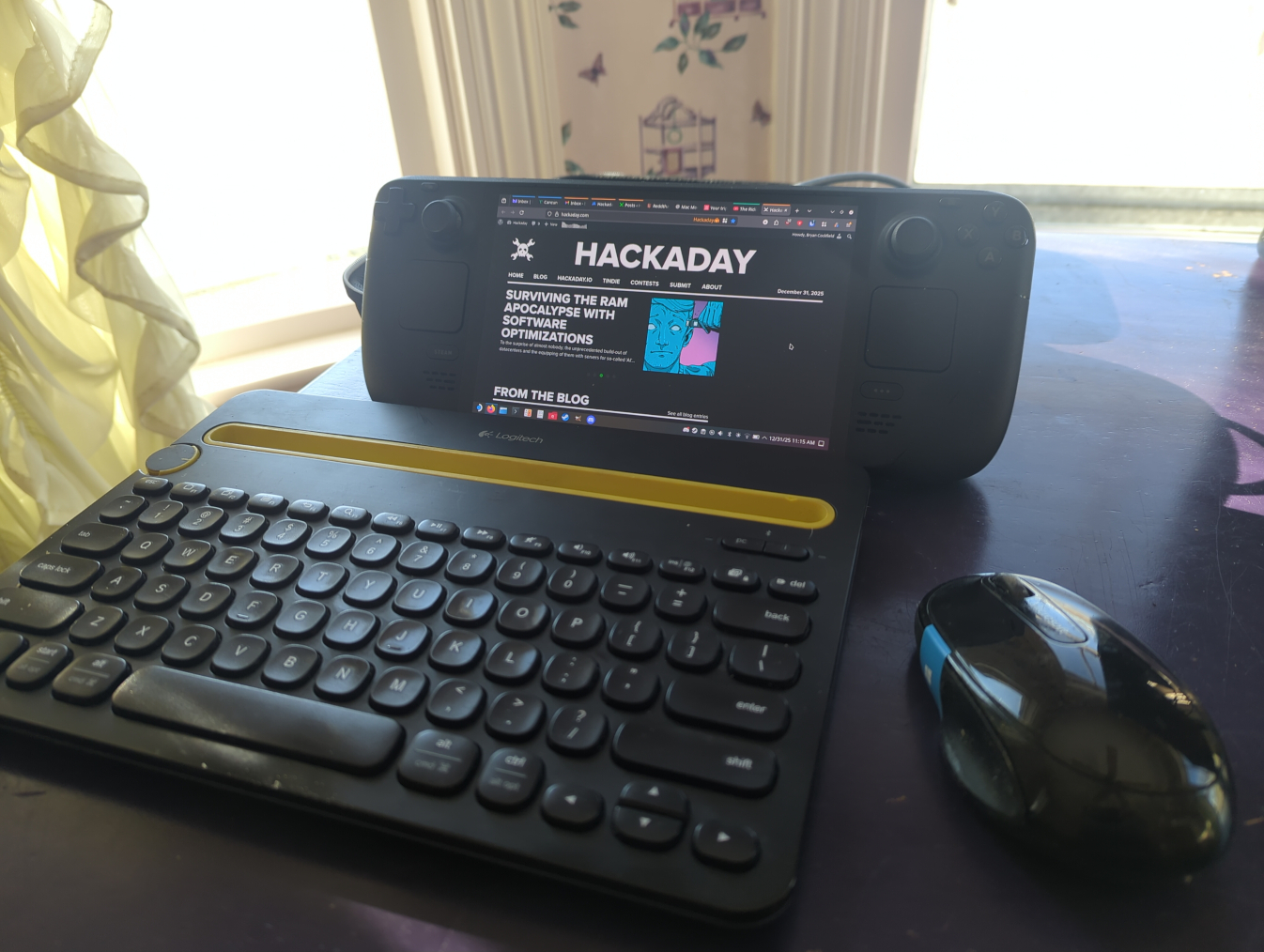


Oh, yeah. SSH from laptop or Termux on my phone.
Not sure if there’s a CLI way to deal with captive portals or not. Maybe a text-based browser like Lynx/Links2 if the portal isn’t super fancy, but I’ve used the MAC cloning method for ages and it’s just my “go to” for dealing with that. Honestly, I don’t deal with them very often since I just use a hotspot much of the time with it.